My fifth year of NB Miata ownership

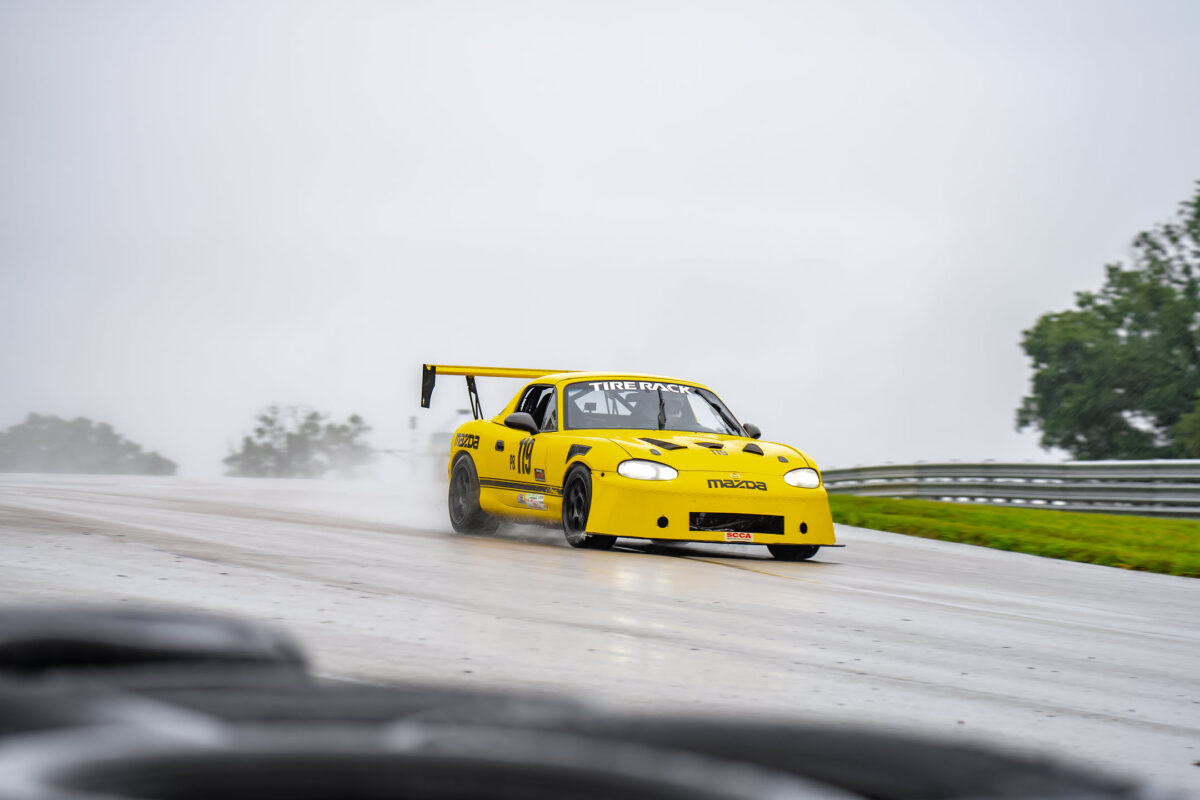
I’ve now owned my NB Miata for five years. I have been writing post where I cover each year of ownership.
This year I continue that format where I cover the year with a single photo and short description for each month of ownership. This particular post goes from March 2025 (where I left of last year’s post) through February 2026.
March 2025: Annual dyno testing
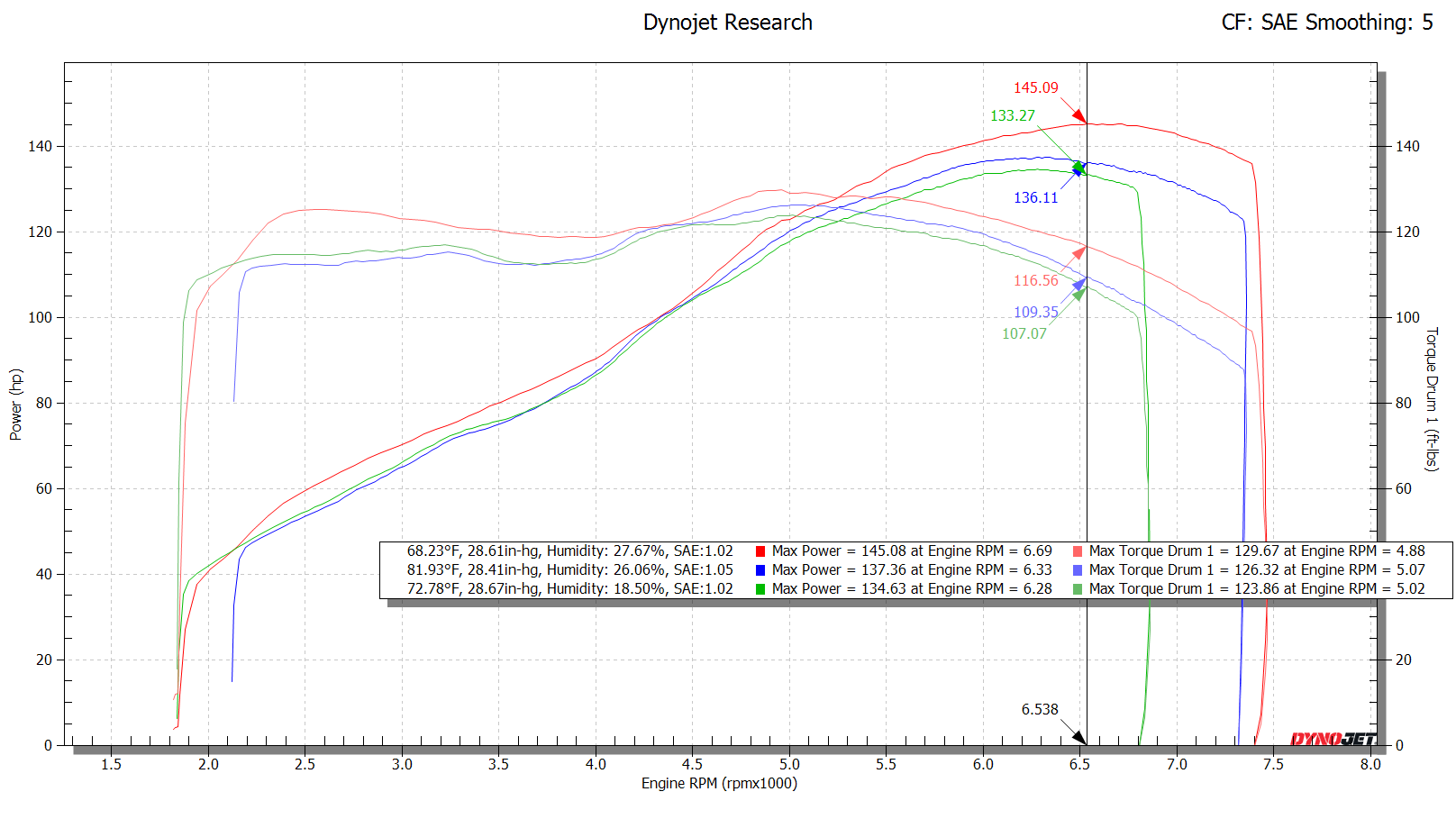
In March I got my car back on the dyno for SCCA MiDiv time trials classing. The only real change this year was the change from the square top intake manifold to the Skunk2 intake manifold.
This year I went to a different dyno since they were a lot cheaper than the place I was going to before, but it’s still a Dynojet so the number should be comparable.
I ended up with 145.09 wheel horsepower and 129.67 wheel torque. This compares to 133.27 and 136.11 wheel horsepower I had measured in the previous two years on the different dyno. Quite a bit more than the 115 wheel horsepower I was getting with the stock ECU.
I have a feeling that this new dyno may read a little high, or maybe the old dyno was reading a little low, but still pretty good power numbers.
April 2025: Hallett Motor Racing Circuit
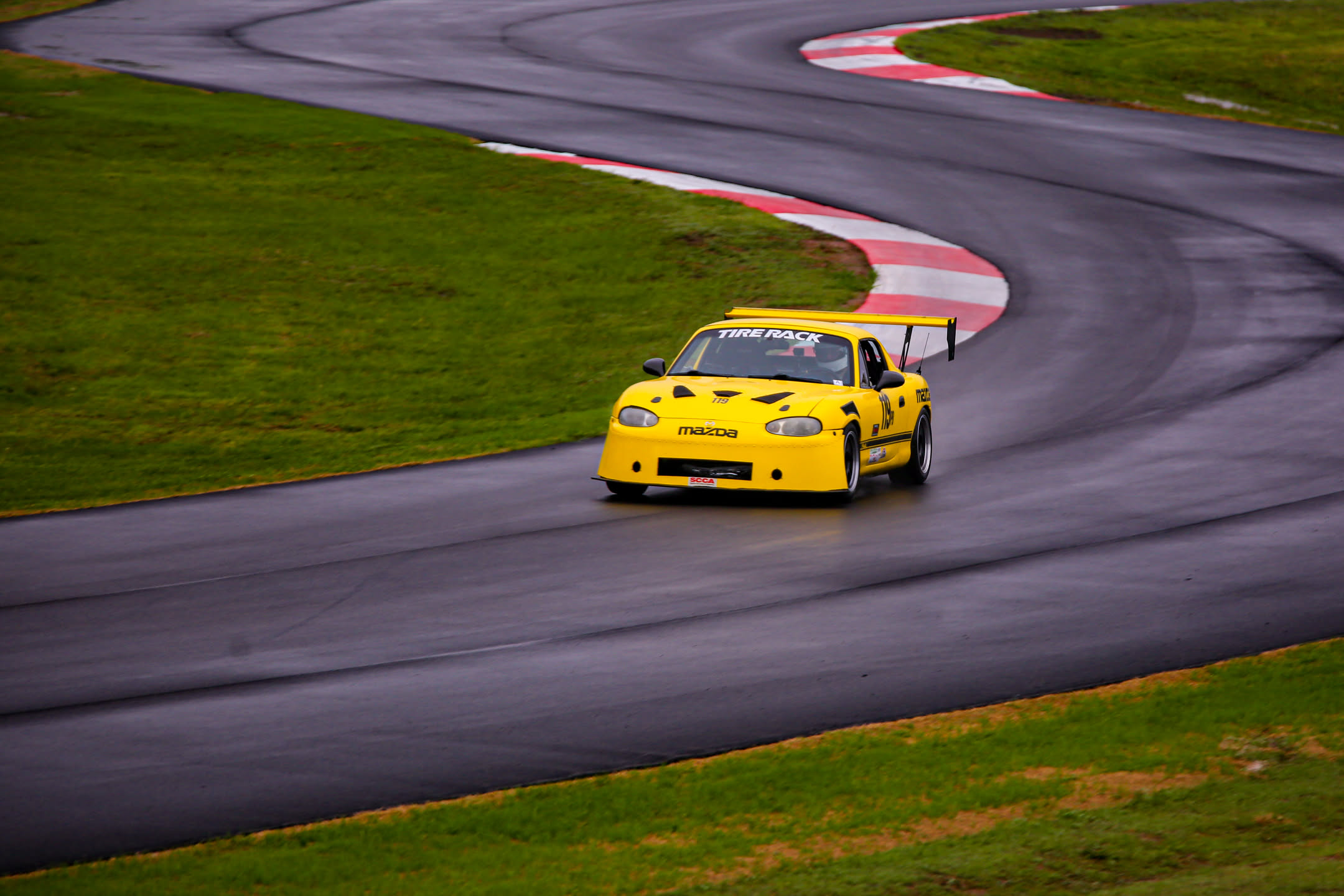
I didn’t really do much in terms of car modifications in April, but I did make a trip out to Hallett Motor Racing Circuit again.
They had re-finished a lot of the corners of the track during the off season. Unfortunately it was wet the whole time I was at the track so I didn’t really get to put down any actual fast laps.
But it was still a good experience, especially feeling out the extended wet braking zones that changed from old surface to new surface mid braking zone.
May 2025: Throttle body issues – part 1
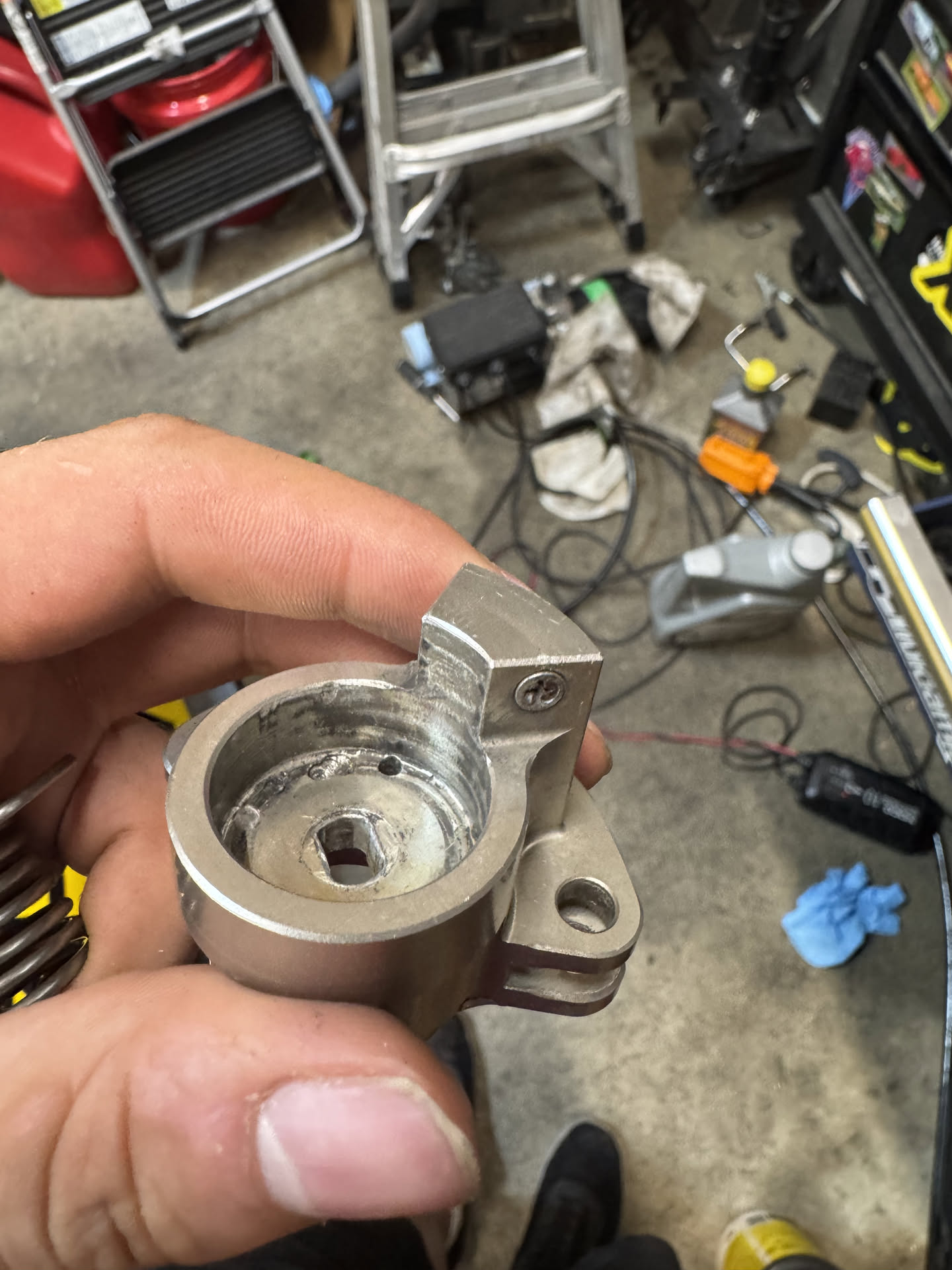
In May during a test day at I29 Speedway I ran into an issue on track in the morning. The throttle return spring on my Skunk2 throttle body broke.
I kept driving, probably faster than I should have. It turns out that it doesn’t take a whole lot to out-brake a Miata’s engine when the throttle body hangs some amount of open without a return spring.
Fortunately I was able to bend a remaining portion of the sprint in a way that allowed me to continue the rest of the day and drive home. I ended up purchasing another Skunk2 throttle body as a permanent fix (or at least that’s what I had hoped it would be).
June 2025: Manual tire changer machine
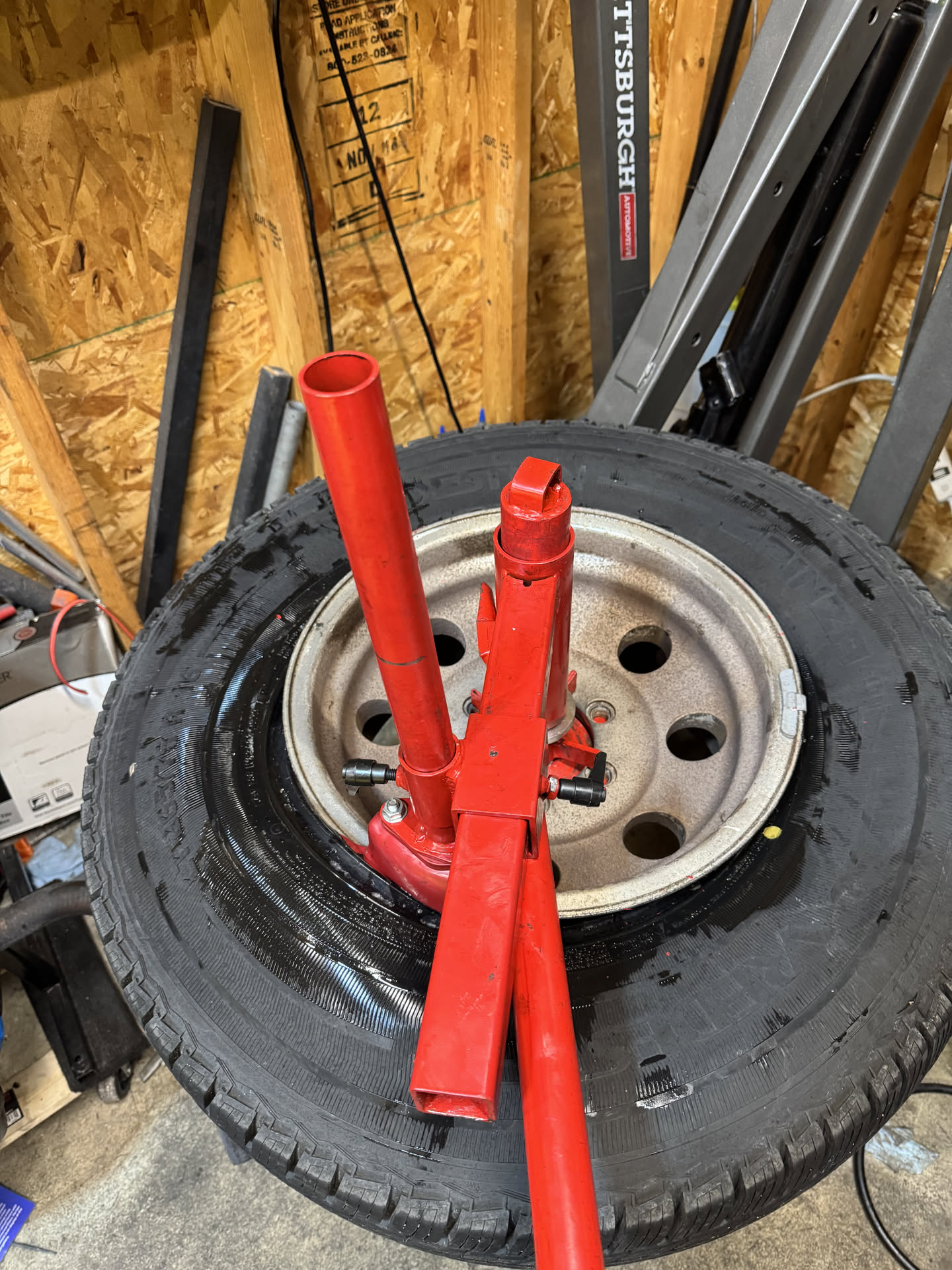
The local tire shop I had been going to continued to raise their rates to the point where I started to question whether it made sense to try to do the work myself.
I caved and bought a Harbor Freight manual tire changer along with a duckhead attachment and a bubble balancer. The premise is for less than the cost of a set of tires being mounted and balanced you can have a tool you can use to do the same work at home for free.
Using the tool was certainly a learning curve, but once I got the hang of it the process really isn’t that bad at all. It’s certainly manual work, but after doing 20+ tires (including many 200TW tires) it’s pretty painless.
I have even found the DIY bubble balance to be good enough for me personally. Honestly I’ve found that the results can be better than the results you can get from tire shops.
July 2025: Ozarks International Raceway
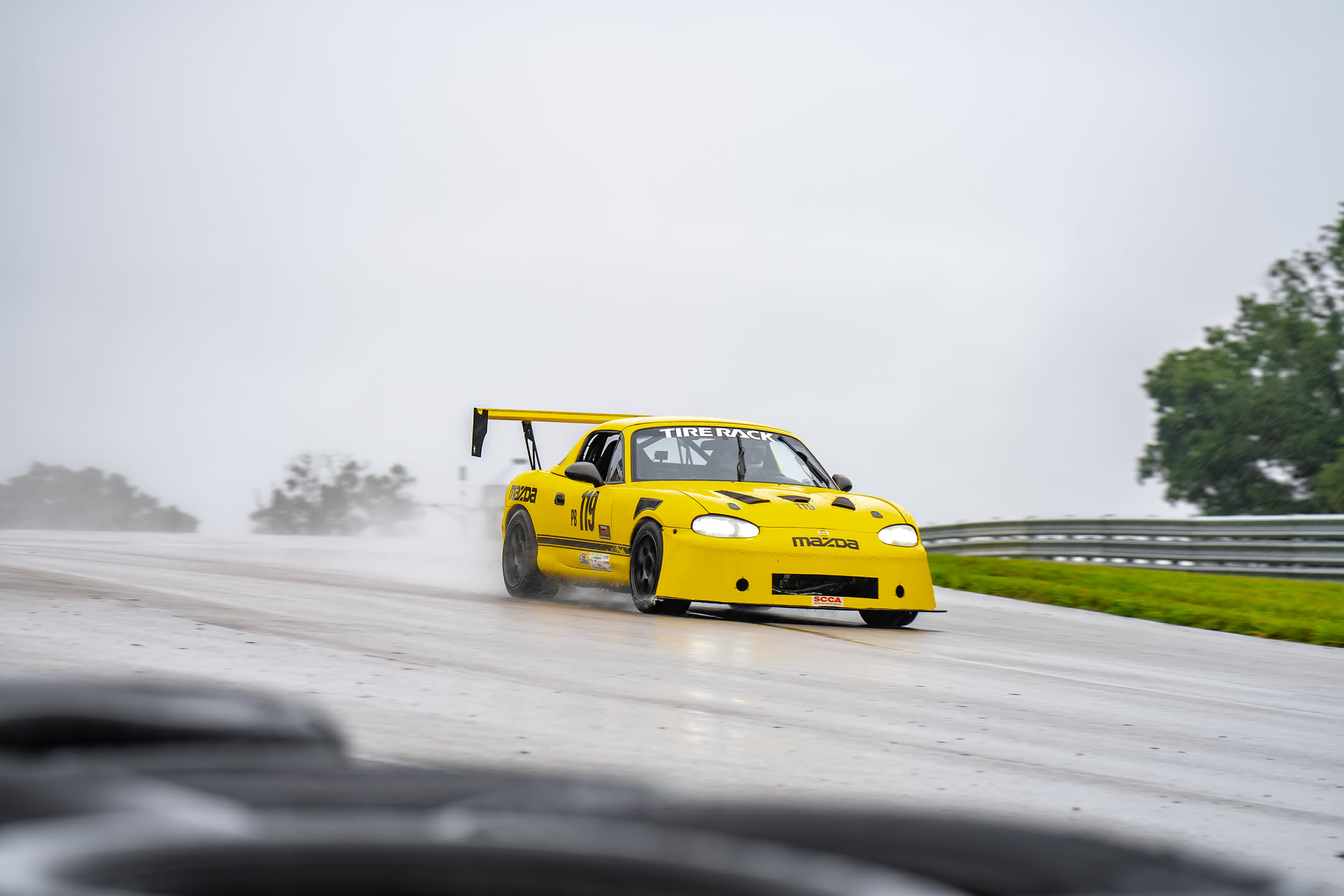
In July I was at Ozarks International Raceway and had a pretty good time again.
This year I had my first wet sessions at this track and I will say it certainly changes the dynamic of the track. The way the water can drain or pool up in certain areas can really make things interesting.
This track is challenging in the dry, so in the wet it’s even more challenging. A great learning experience.
August 2025: Throttle body issues – part 2
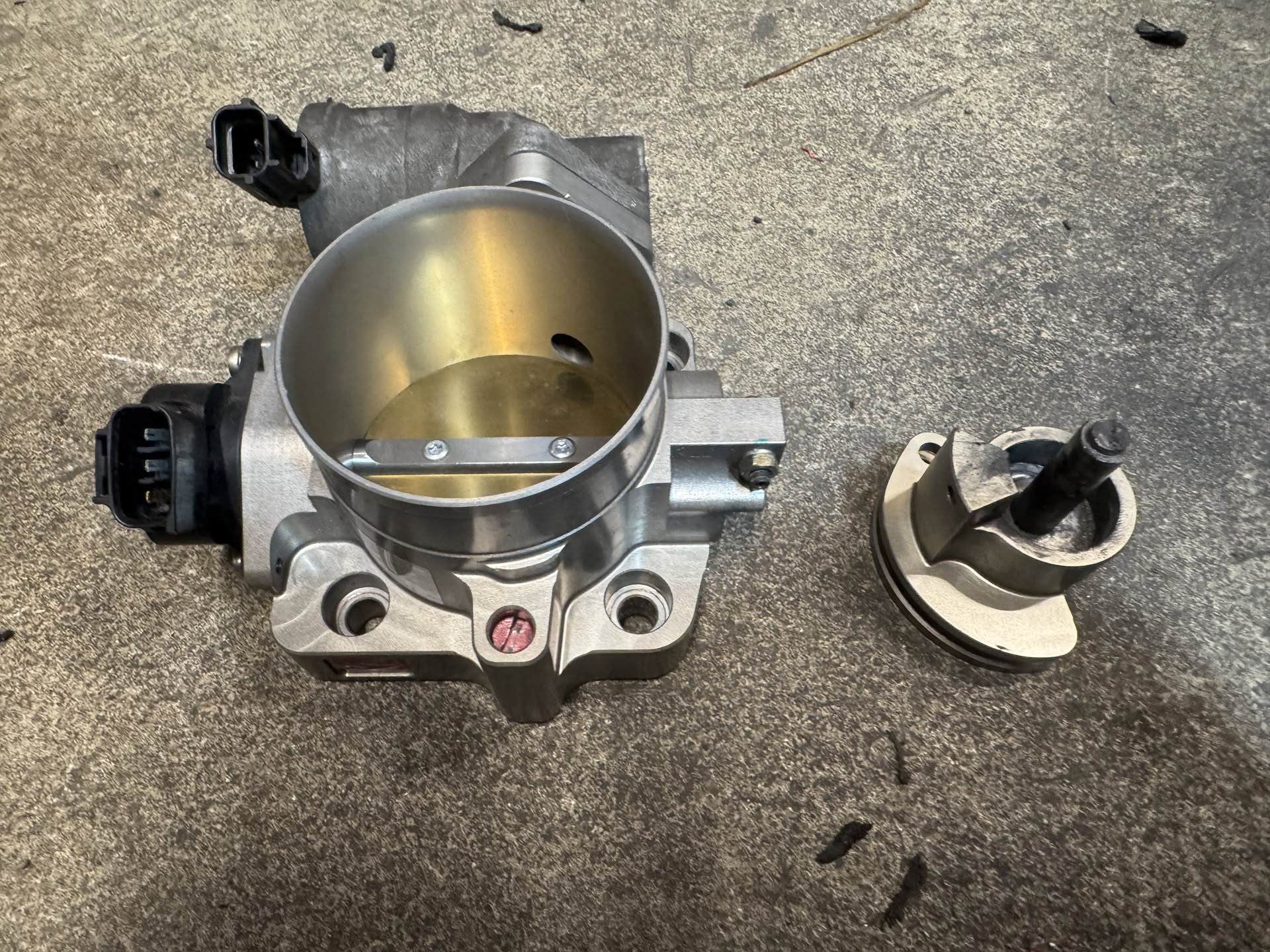
In August I had my second set of throttle body issues at High Plains Raceway. During the first timed lap of my last session of the weekend I put my foot to the floor to head down the main straight and all of a sudden my car had no more power.
Turns out the throttle body shaft broke completely off. Thankfully it wasn’t the inside part so the engine didn’t swallow any pieces, but it still resulted in me needing to be towed off track.
After two broken Skunk2 throttle bodies in one year I decided I needed to find another solution. For the remainder of the racing season I used a stock Miata throttle body until I could find something better.
September 2025: A year of open car hauler enhancements
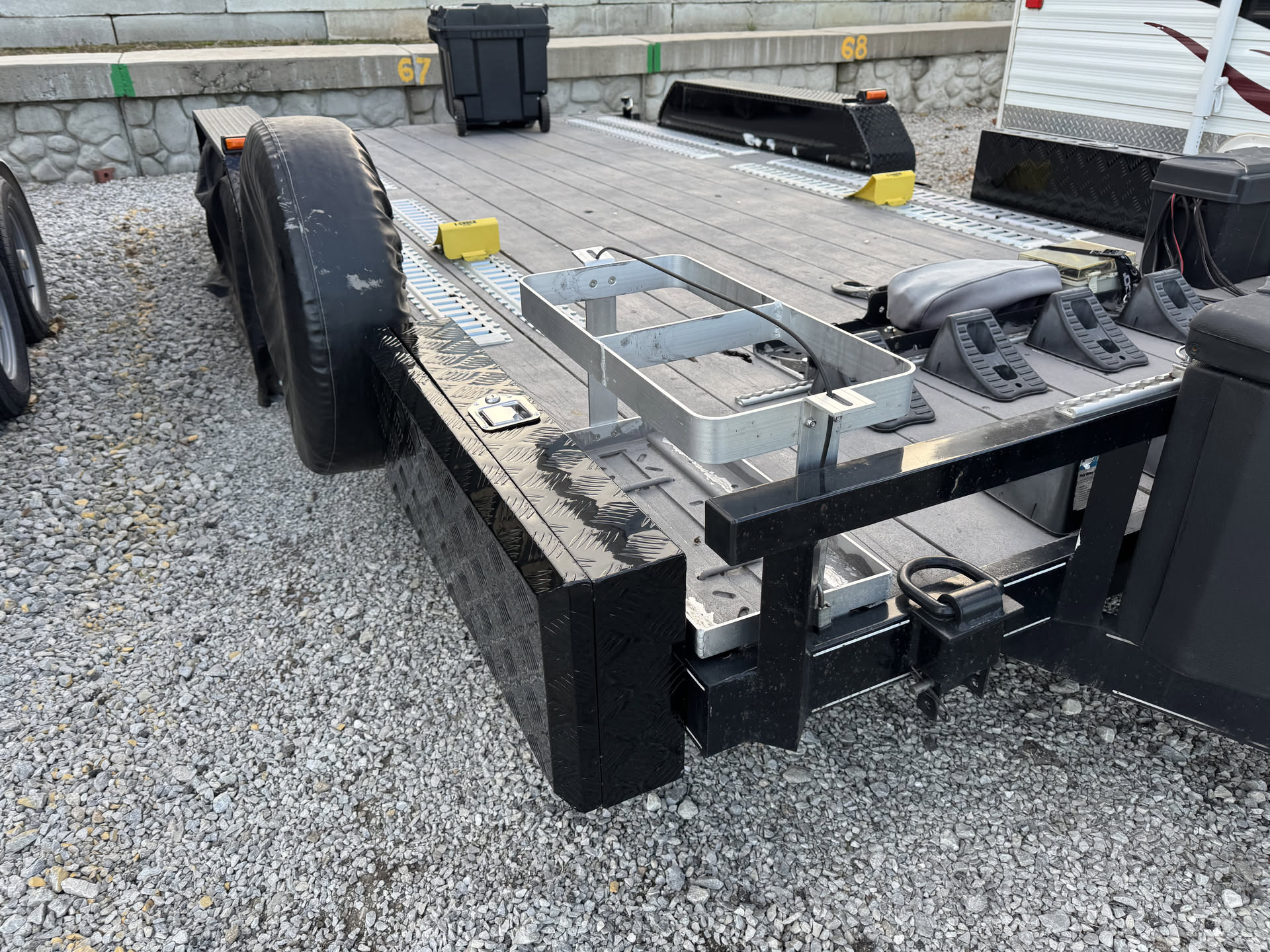
I wanted to share some updates I have made to my open car hauler trailer since the last mention of it in last year’s post.
Upgrades done this year include:
- Rows of E-track for strapping down my car, and some stops I can use to mark where I normally position the car
- Two side mounted aluminum boxes for straps and other items (one on each side)
- Added fender lights
- Installed a runaway cable that runs off of the 12V battery on the trailer
I have been very pleased with the E-track tie downs. From my experience they don’t really loosen at all even during the first ~50 miles like how the tie downs pulling on the wheels / axle strap type tie downs.
October 2025: Custom engine wiring harness + drive by wire conversion
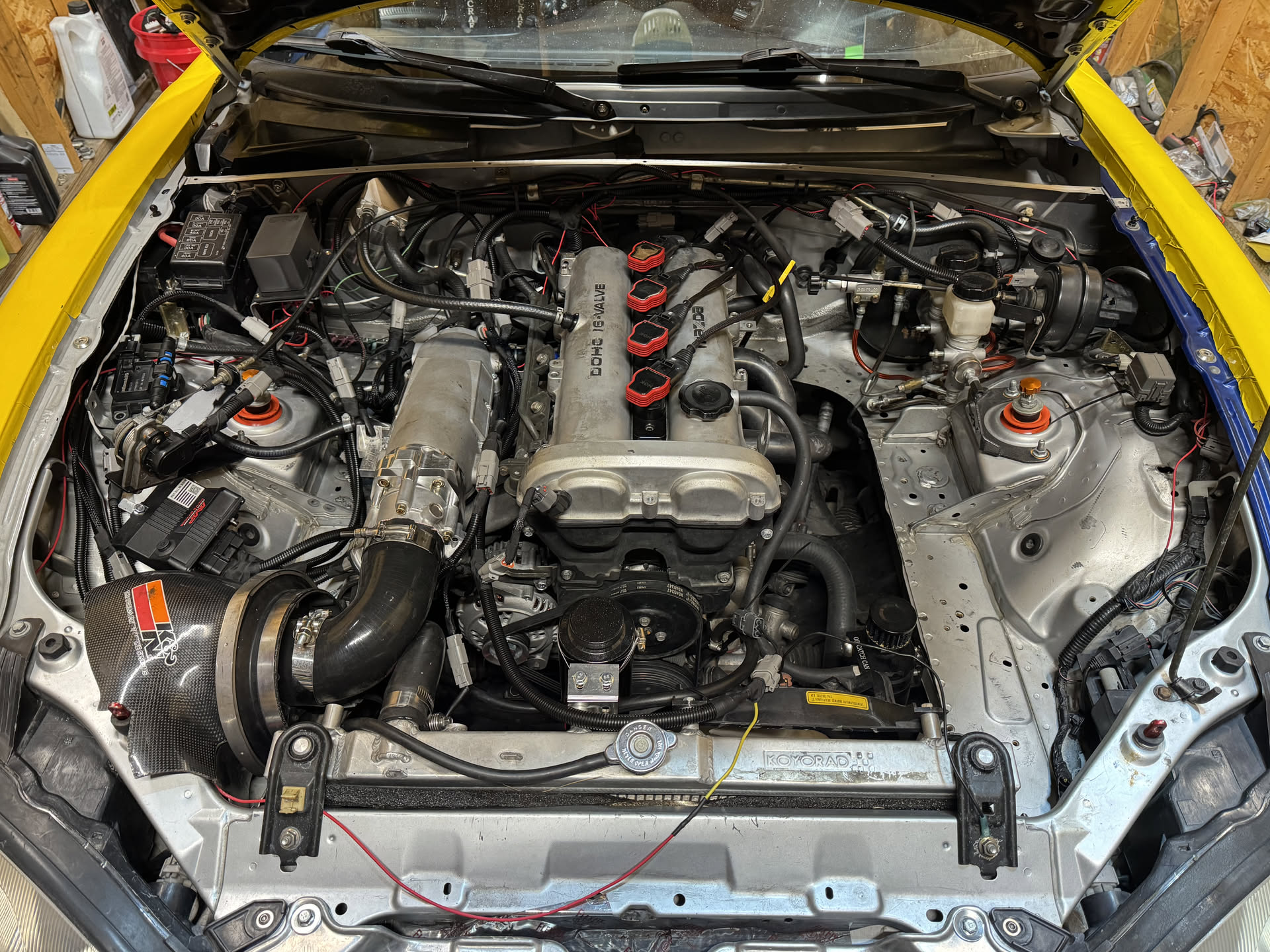
Due to the reliability issues I encountered this year, primarily due to the two broken Skunk2 throttle bodies, I wanted to do some work in the off season to prevent future issues.
I decided to rewire my entire engine harness from scratch directly to my MS3Pro Evo ECU, and to convert to drive by wire.
Previously I used the stock engine harness through the stock ECU connectors and made an adapter that converts the MS3Pro Evo harness to the stock ECU connectors. This seemed like another point of failure (the adapter plus the 25 year old engine harness).
By rewiring everything I had a much simpler wiring setup that should be much more reliable. It’s fairly modular using Deutsch connectors. I added my own fuse/relay block and a ground bus bar to simplify wiring.
To finish it all off I converted to drive by wire using a Bosch 60mm throttle body, Honda accelerator pedal position sensor, and an AMP EFI drive by wire controller.
We’ll see how this all holds up next year.
November 2025: Tinker Electronics digital dash
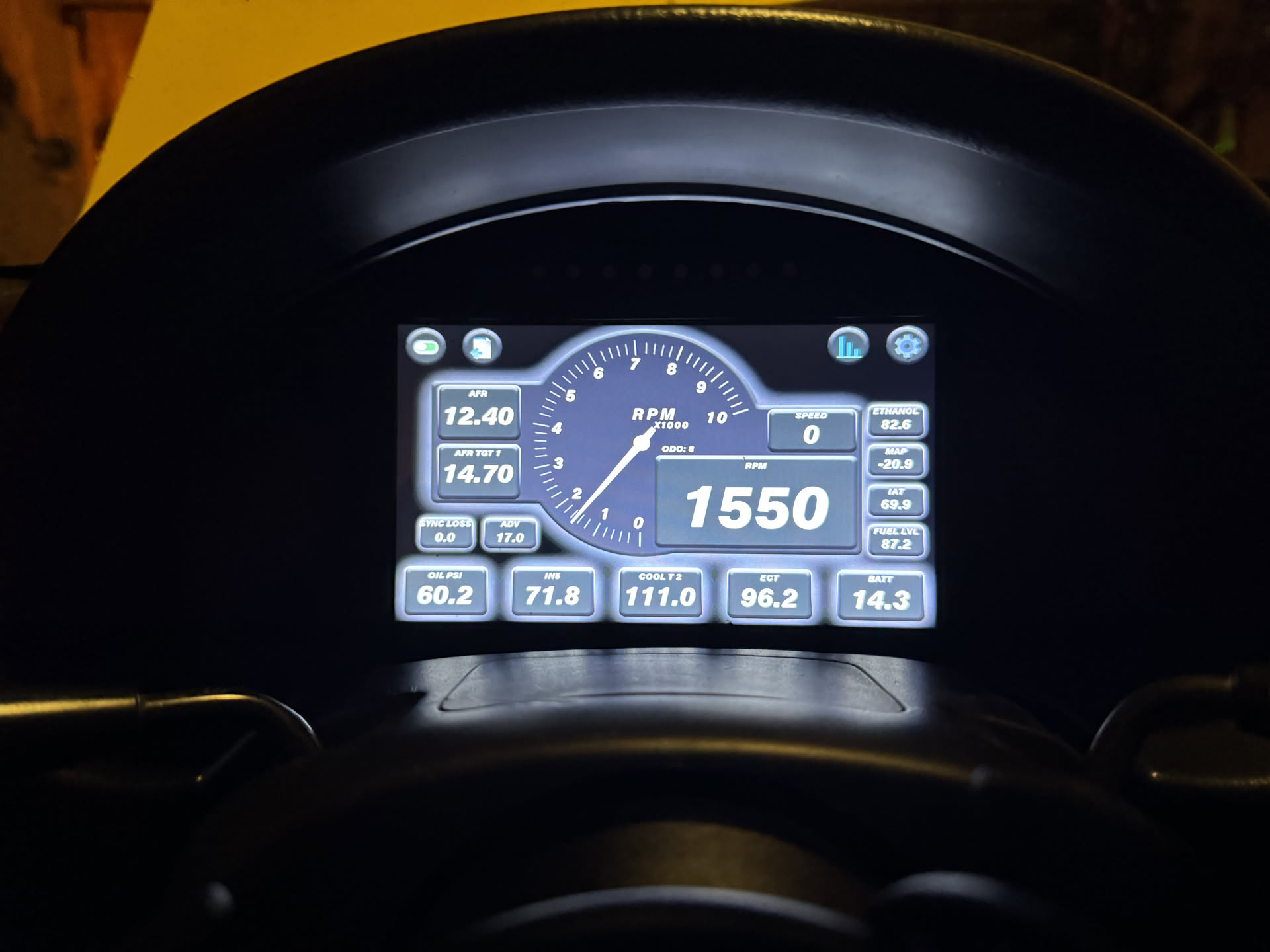
I ran into some issues getting the stock speedometer to work after switching to my custom engine harness (turns out I just mixed up one of the wires in the ECU connector). As an easy way out I ended up purchasing and installing a Tinker Electronics digital dash.
This is fairly affordable digital dash that can read Megasquirt data from the CAN bus and seems to work pretty well. It allows me to have all of the information I need easily readable.
Right now I have it configured to show:
- RPM
- Speed
- Coolant pressure
- Coolant temperature
- Oil pressure
- Oil temperature
- Battery voltage
- AFR actual
- AFR target
- Ethanol percent
- Fuel level
- Intake air temperature
- Engine air pressure
- Sync loss count
- Ignition advance
Some of the important readings are configured to show as red if they go outside of what they should be. I also configured shift lights and turn signal indicators.
Overall I have found it to be a pretty solid dash.
I configured the Megasquirt to read the stock vehicle speed sensor, convert it to speed, and then output it in a way that allows the stock cruise control to still work.
December 2025: Coolerworx short throw shifter
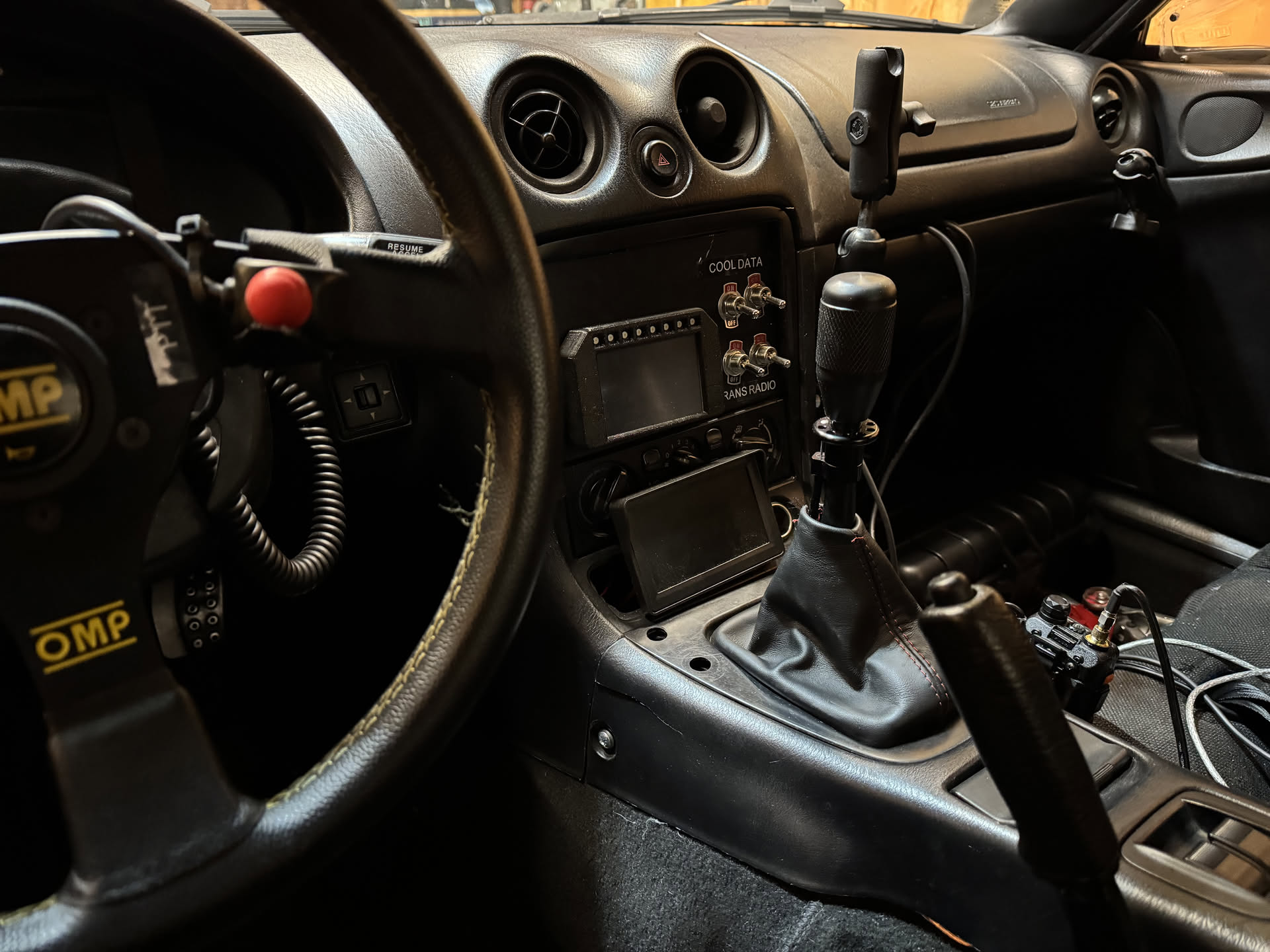
In December I installed a Coolerworx short throw shifter.
Previously I had been running a Miataroadster tall angled short throw shifter. This shifter works, but I still frequently ran into mis-shifts on track which were very frustrating and potentially dangerous.
The Coolerworx shifter should resolve a lot of the issues I have been having with my old shifter.
First off it has a much stiffer external return to center spring, making it very obvious which gate I’m in. Additionally it has some set screws that set the position of the gates so I can slam the shifter and know for sure I’m in the left or right gates.
The final nice part of this shifter is that it has a reverse gear lockout. This means I can slam my shifter all the way to the right without having to worry about getting into the reverse gate.
So this shifter should really make me more consistent on track.
January 2026: OS Giken differential
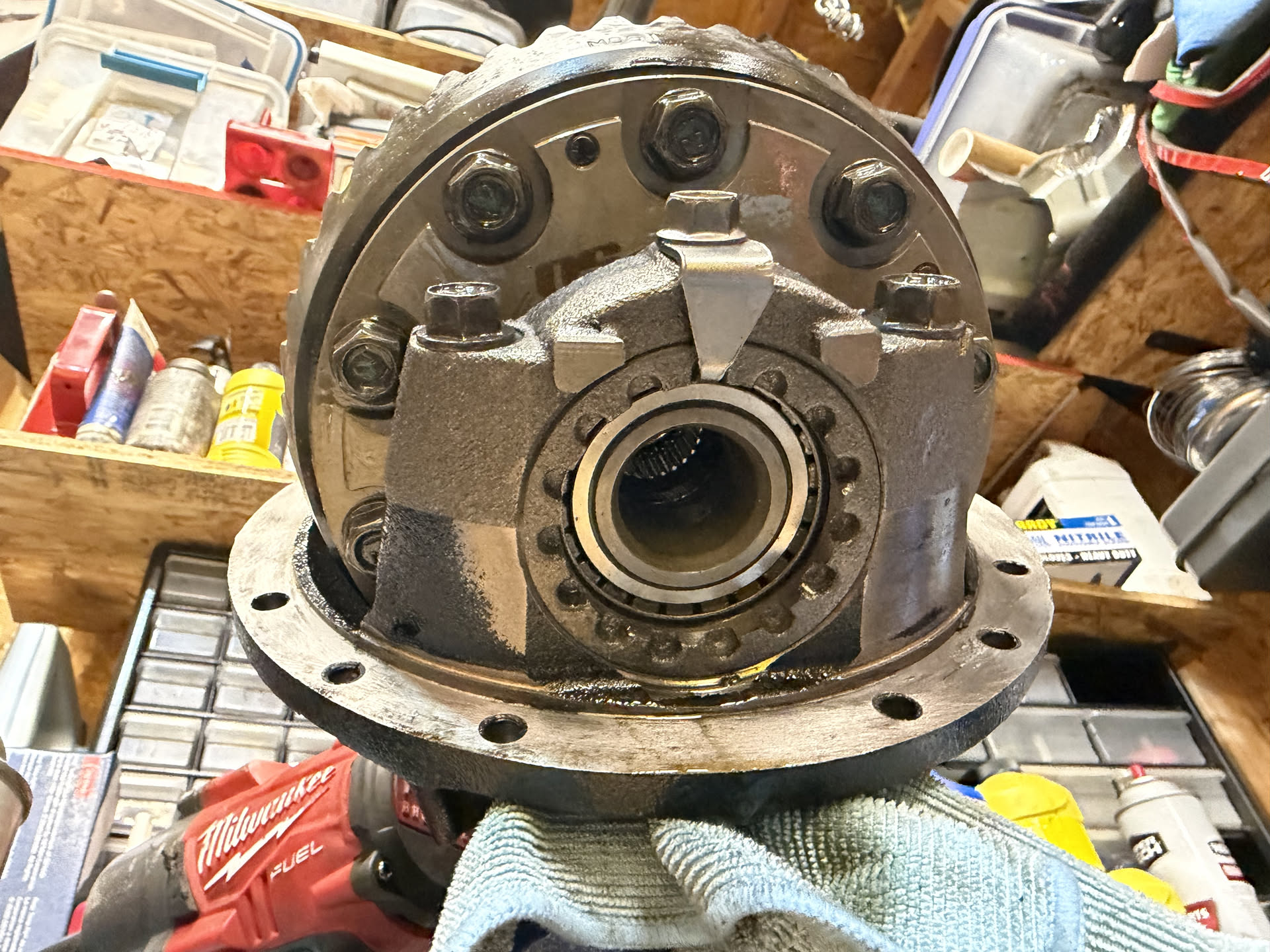
I have been running a 4.30 Torsen type II differential in my car for several years at this point. It has worked pretty well, but based on some of the data I have it seems like it struggles in some situations. Most notably sharp low speed turns where one of the rear wheels ends up unloaded.
I decided to purchase and install a Supermiata tuned OS Giken differential into my car for the 2026 season. I’m really looking forward to seeing how it feels on track and learning how to drive in a way that takes full advantage of it.
I kept the 4.30 ratio since it seems to work pretty well at putting down power with the 6 speed on track at stock power levels. Instead of tearing apart my Torsen I installed the OS Giken into a 4.30 ratio open housing.
February 2026: What’s better than one Miata? Two Miatas!
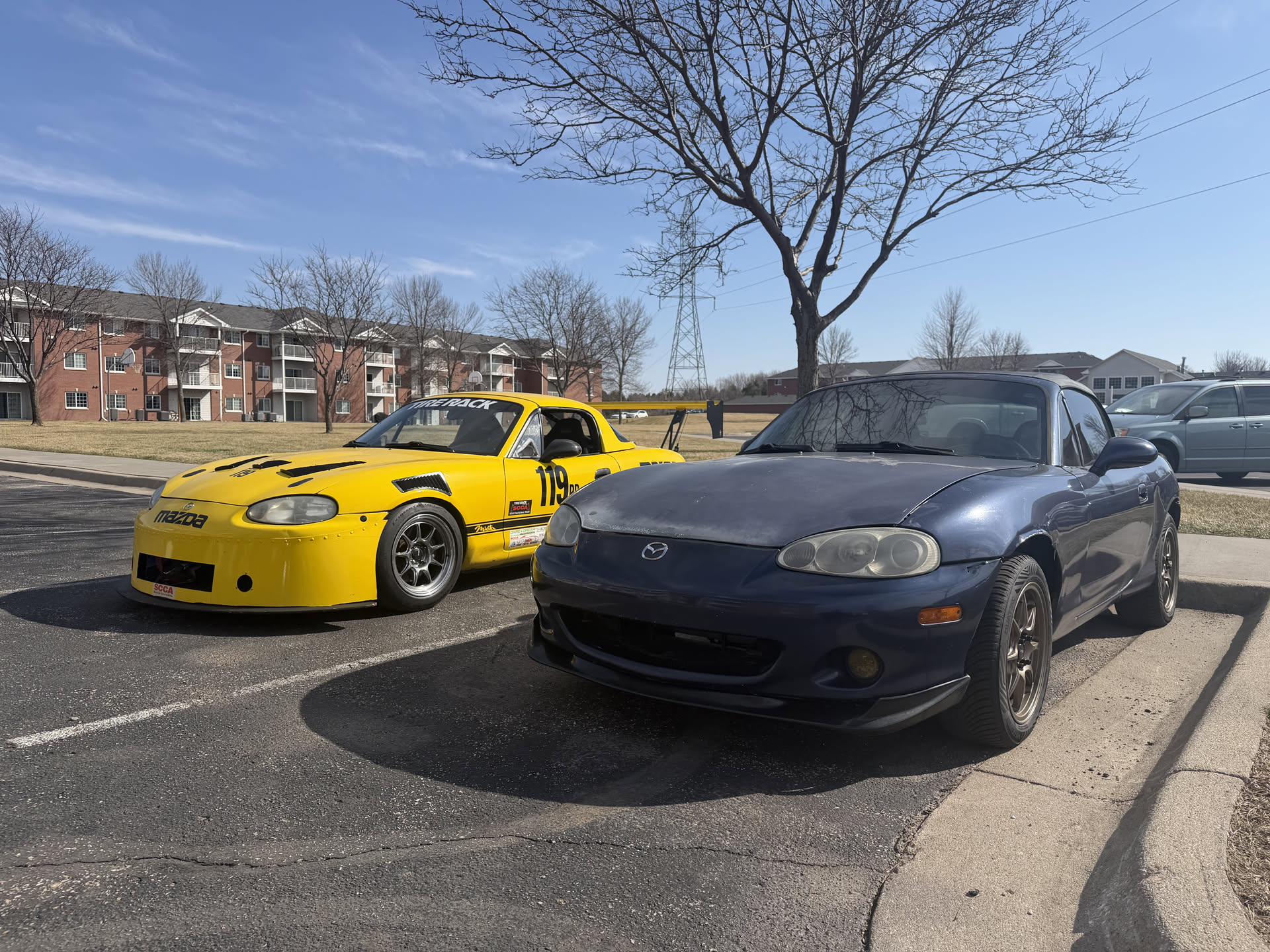
My 2000 Miata has been a great car over the past five years of ownership. It started as a completely stock gray car and has turned into a very serious yellow track car.
I have been considering buying a second Miata to have as more of a fun street car and maybe a little bit of a test/experimentation car for some time now. In February I saw a 2001 Miata for sale on Facebook Marketplace that I couldn’t pass up.
It was a pretty rough car (slammed on cheap coilovers, welded differential, torn soft top, no interior, missing a window, body damage, some clear coat fade), but at $1,800 I knew I could put a little bit of time and money into it and turn it into what I’m after and still be ahead money wise.
The photo above is after a month of work. New soft top, installed an interior, new wheels and tires, stock shocks, and my old 4.30 Torsen differential are some of the many things I’ve done so far to clean up this car.
It’s still rough around the edges but the VVT motor, 6 speed transmission, and 4.30 Torsen in a rust free shell is hard to beat for the money.
Conclusion
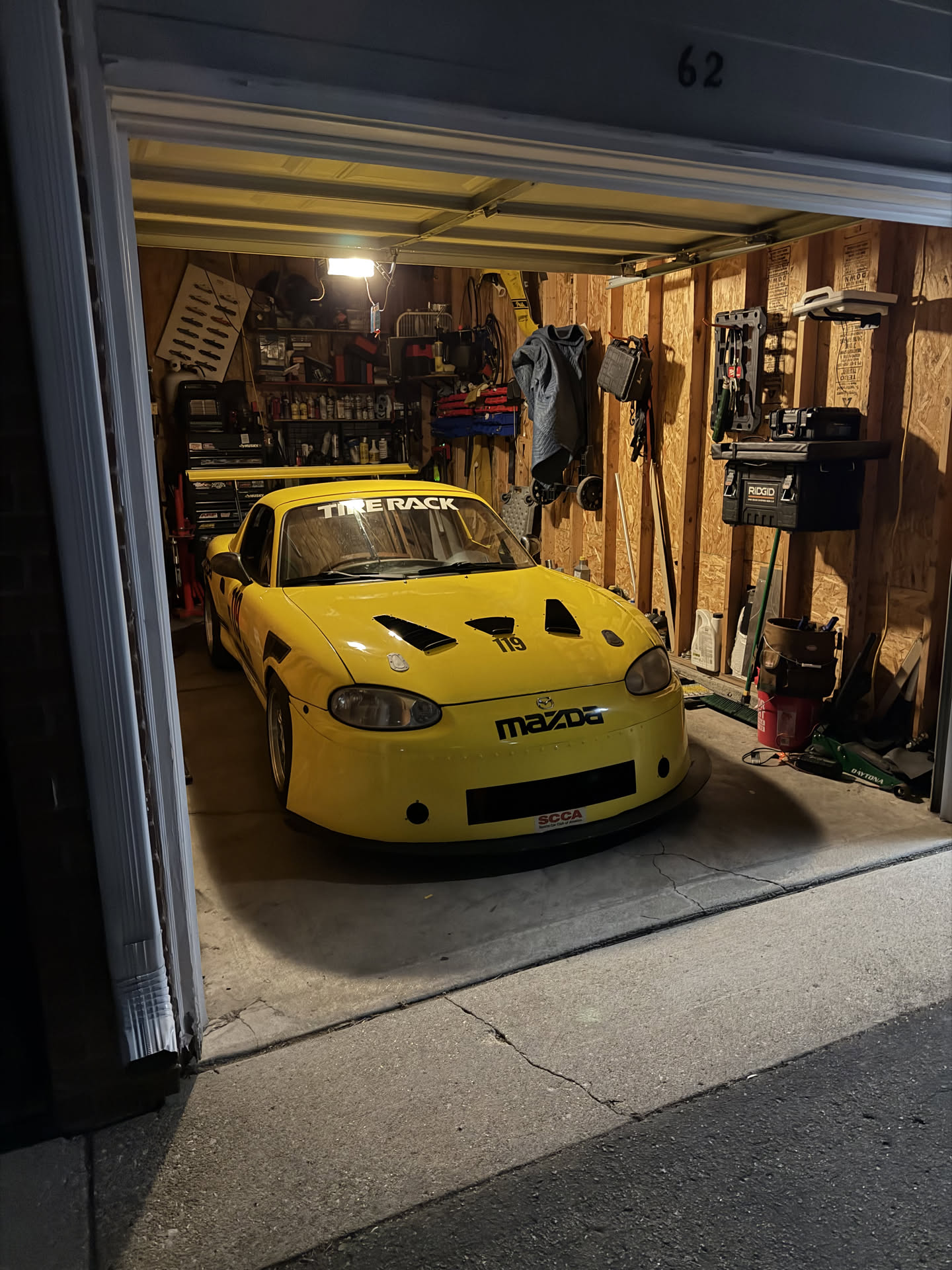
Just like most of the third and fourth year I spent most of the fifth year driving my NB Miata on track. In 2025 I completed 357 laps, totaling 10.9 hours of track time. That is made up of 14 days on track.
My Garmin Catalyst says I’ve done 1380 laps, or 43.8 hours of track driving with my car. I’ve driven slightly more since I did my first couple of days without a Catalyst, and there has been at least one time where the Catalyst didn’t work.
Not a whole lot of personal best lap times this year, but conditions are starting to be a pretty big factor at the tracks I’m the fastest at.